
 On-road RC racing cars are very sensitive to minor adjustments. This means maintaining your car is quite important if you want it to perform at the highest level possible
Your instruction manual will likely provide a list of recommended tools. For most of these tools, you can get away with using whatever you have access to. There are a few that are worth invest in high quality however Three Most Important Tools: 1. 1.5mm Hex Driver. This will be used primarily for tightening your pinion gear screw. This screw is small and the last thing you want to do is strip the screw from using a low quality or warn out tool. Invest in a good quality 1.5mm hex driver and you won't regret it 2. 2.0mm Hex Driver. A 2mm hex driver is among the most used tool in EP touring cars. Although the quality of this tool isn't quite as important as a good quality 1.5mm for your pinion gear, you'll be using this tool a lot and a good tool will help avoid stripping and/or damaging the screws on your fancy new RC car 3. 7.0mm Nut Driver. This is for your wheel nuts. You're also going to use this one a lot. The quality of this tools isn't quite as important as your hex drivers but, if you're shopping for tools and it's within your budget, consider getting a quality 7mm nut driver to match your other tools Brands: There are many good RC tool brands to choose from including Hudy, MIP, Arrowmax, MR33, Protec and many more. You want to focus on quality and availability. It's all well and good to purchase a nice tool from MR33 for example but it will be a little bit harder to complete your set as these are not readily available in North America (I important them from Germany upon request but this sometimes takes a month or more) Choose Hudy or MIP Hudy I recommend Hudy for several reasons - they are very high quality, they are readily available (through me or online) and you can complete your tool set with all the tools you'll ever need in the future. Hudy tools are expensive but if you view them as a long term investment, they are actually a good value. Another bonus with Hudy tools is that you can replace the tip should you ever wear one out MIP MIP tools are also very high quality and are generally a little lower price when compared with Hudy. They are also a little bit easier to obtain locally. Before switching all of my tools over to Hudy, I used and enjoyed my MIP tools. The issues I have with MIP include non-replaceable tips - if you break or wear out a tip, you'll have to replace the entire tool. The 2mm driver is too short to adjust camber screws on some of the modern touring cars and lastly, if you like everything to match, MIP doesn't offer setup tools etc the way Hudy does Avoid: Avoid the temptation to buy the no-name brand, made in china tools. The "deal" may look too good to pass up but the frustration from stripping and damaging screws just isn't worth the hassle. Buy fewer tools and focus on quality Tool hack: If you already have a set of tools with removable tips, you may be able to upgrade the tip to a Hudy. This will be cheaper than buying a complete Hudy tool. You can upgrade the tip of the most important tools and keep the others as-is for now Future Considerations: There will be many more tools that will come in handy but these top three will get you started. Later, we'll look at some chassis setup tools and maybe some of the specialty tools but for now, these three are all you really need  If you followed my earlier advice of purchasing a 4wd EP touring car, and you're going to enter one of the two classes that I recommended (Scale Spec, Touring Stock) you can now purchase a body that is within the rules of your chosen class
Be sure to double check the rules before you make a purchase - things do change from time-to-time. Here are links to our two local clubs/tracks so you can review the rules: Scale Spec Bodies: One of the coolest things about Scale Spec class is the fact that the bodies are somewhat more realistic looking than the other touring car classes. I offer a variety of Scale Spec bodies for sale or you can browse online to see what you can find that looks good to you Brands: Some of the more popular brands of Scale Spec bodies (often also called USGT or GT) include Mon-Tech, Exotec, BittyDesign and ZooRacing What to Buy: There are many choices available. Choose any 190mm "GT" style body that looks good to you but avoid front wheel drive bodies like Honda Civics etc as they will not give you the downforce you will require. Try to also avoid anything with attached scale details like bumpers and mirrors as you will not be able to use those attachments in racing. Think sleek, lightweight with a lot of downforce LMP Bodies: There is a new line of LMP bodies by the brand Mon-Tech that look amazing but they are not fully approved for racing in Scale Spec class so be careful if you purchase one of these...depending on the track and the race director in charge, you may or may not be able to run one of these LMP bodies. Best to not risk it until we see whether or not these bodies will be permitted Touring Stock Bodies: When you move away from Scale Spec and into the touring classes (Touring Stock, Touring Mod) the bodies are less about looking realistic and more about performance. In these classes, the body you choose is more important as it will dramatically effect the performance characteristics of your car Brands: The current most popular brands include Xtreme, ZooRacing and Lens Bodies. Every now and then, another brand will make an appearance but for the past couple of years, everyone from locals to pro racers seam to be choosing the same couple of bodies What to Buy: For touring stock, I don't recommend you get creative with your body choice. Simply buy an Xtreme Twister Speciale in the 0.7mm thickness. The Speciale is the "go-to" body for most stock racers. If you choose this body, I'll be able to help you mount it correctly (very important) and you can follow the body mounting tips on the "HOW TO" page as well  McLeanRC is proud to be a sponsor of Ready to Run Raceway's 2024 Summer Challenge race event coming August 3-4
It's always free for spectators to watch so if you are curious to see what on-road RC racing in Richmond, BC is all about, feel free to drop by and watch some of the action Saturday to be qualifying - not actual racing but still fun to watch. We'll be racing against the clock to find our starting order for the races Sunday is the best day to watch if you want to see the most competitive racing action. You'll see electric powered RC cars driven by all levels of drivers ranging from beginners to experts along with thrilling nitro powered (gas) cars with loud engines, pit stops and fast speeds Feel free to come and say hello if you see me (look for my RC parts for sale and my all white coloured RC car) Learn more about Ready-to-Run Raceway on their Facebook Page: https://Facebook.com/VancouverRRR  When it comes time to choose your tires, you have a few options depending on the class or classes you decide to enter and whether or not you'll be racing outdoors at Ready to Run Raceway or indoors at Overgeared Racing
Here are the current tire rules for the two clubs...be sure to check the rules again before purchasing tires to make sure this is still current and correct: Tires: Ready to Run Raceway (Outdoor):
Overgeared Racing (Indoor):
Tire Sauce / Additive: In addition to purchasing tires, you're going to need some tire additive or "sauce". We use tire additive to soften the tire and dramatically improve the grip of the tire. Ready to Run Raceway (Outdoor):
Overgeared Racing (Indoor):
Tire Prep: Tires are among the most important items on your car. Preparing your tires correctly will make a big difference in the performance of your car. Feel free to ask me for some pointers on tire prep or you can check out the "HOW TO" page for a few articles and videos I've gathered from the internet Back to Getting Started Series >  RCMaker posted this image of some production parts of the upcoming SP1 Touring Car and SP1-F FWD
They also said that they will be presenting both cars on the 1st of August 2024, and at the same time will open up Pre-Orders both directly and through their global distributor network! RCMaker will provide an estimated global release/shipping date when both cars are presented on the 1st of August!  If you followed my earlier advice and purchased a 4wd touring car and plan to enter either Scale Spec or Stock Touring class, your battery choice will be pretty easy
You'll want to find a quality, 2s, hard case, LiPo battery. Easy Brands: I recommend you stay away from the no-name Amazon specials. Stick to a well known brand like ORCA, R1, Phantom, Reedy, Gens Ace etc. Not only could a cheap battery affect the performance of your car, it is also a safety issue. The last thing you want is some cheap, puffed up battery causing a fire at the track or in your house mAh, C-Rating, LiHV: As a newcomer to racing, don't worry too much about the mAh or C-rating or whether or not the battery is LiHV or LiPo. All of these things matter but, I'll keep things simple for you Just buy this: ORCA 6390mAh 2s LiPo. This is the most popular battery used at our local tracks and is perfectly sized for your touring car. Not only physically but also in capacity and weight Why ORCA: ORCA batteries are very high quality, perform exceptionally well, are durable and long lasting. ORCA also goes above and beyond to support our local clubs with prizes, gifts and other support so returning that favour to ORCA by purchasing their products will help continue this into the future New vs Used Used batteries come up for sale fairly regularly. Just be sure to inspect the physical condition of the battery and avoid anything that looks to be puffy/swollen or has a cracked case - this is for the safety of your RC car, the racing facility and your home. If possible, you can check the health of the battery by running a test cycle on a quality charger. Look for a low IR (internal resistance) and cells that have similar IR and capacity to one another. If the two cells have a large variance in either voltage or IR you may want to continue looking for a different one. I occasionally have used batteries for sale so feel free to ask me or, you can also try posting a wanted ad on our local Facebook buy and sell page: Back to Getting Started Series >  Choosing a battery charger can be as simple or as complicated as you'd like it to be. Before you buy a charger, the question you may want to ask yourself is how good of a racer do you want to be
If you're happy to just go out and race with your buddies and have fun, then pretty much any charger capable of charging a 2s LiPo battery will be adequate. If, on the other hand, you have ambitions of being one of the more competitive racers and are willing to do whatever it takes to get the very best out of your car and equipment, you may want to invest in a premium charger (and possibly discharger) Of course, you can always start with whatever charger you currently have or can find that is within you budget then upgrade at a later date if you feel it will help Here are my top charger suggestions: Top Suggestions: Premium: Muchmore Specter, iCharer 406 Duo, iCharger DX8 Middle: Hitec RDX2 800, iCharger X6, iCharger S6 Entry Level: Hitec RDX2 200 Why These Chargers: Muchmore Specter - this is the charger I currently use and I'm very happy with it. When combined with the optional discharger, I am able to charge and discharge my batteries at a high rate and so far, it has been very reliable. The biggest thing to keep in mind with the Specter (other than the high price) is that it is a single channel charger so you'll only be able to charge one battery at a time iCharger 406 Duo, iCharger DX8. iChargers are the go-to charger for most serious RC racers. They are not without their issues (convoluted menus, occasional reliability issues) but they work extremely well for charging accurately and powerfully Hitec RDX2 800. I like Hitec chargers and prior to racing, used them for years with zero issues or problems. The RDX2 800 gives the option to bridge two charging channels into one so that you can charge at a higher rate - not quite as high as the premium chargers mentioned above but pretty close. You can also add an optional discharger for when you get in to cycling batteries for maximum performance iCharger X6 and S6. These are nice little chargers. They can also charge at a fairly high rate and you can add an optional discharger if you decide you'd like to also cycle your batteries with these Hitec RDX2 200. A good, solid, easy to use charger at a fair price. It will charge, discharge and storage charge your batteries without any fuss or complication. A good starting point for sure Other Considerations Depending on the charger that you choose, you'll likely need a power supply and some type of charge lead (the wire that goes from your charger to your battery) so keep that in mind when you are shopping Used Equipment: One way to save some money on a charger is to consider buying a good used one. For the most part, chargers don't wear out so if you can find one that has been taken care of, it will probably be okay to buy used. Try posting a "wanted" ad on one of our local Facebook buy and sell pages: Back to Getting Started Series >  When it comes to choosing your first ESC, you have many options. I'll try to narrow down your choices...
What Brand: Just like everything else though, I'm going to suggest you stick with what is the most popular at our local tracks...ORCA Why ORCA: ORCA ESCs are very high quality and are reasonably priced. ORCA also goes above and beyond to support our local clubs with prizes, gifts and other support so returning that favour to ORCA by purchasing their products will help continue this into the future. Additionally, virtually all of the fast drivers at our tracks run ORCA so you'll be able to get support from several people to ensure your ESC is setup correctly Which ORCA ESC Model: Depending on your budget, you have a few different choices. Here they are, listed from lowest price to highest
New vs Used Used ESCs don't come up very often but people do upgrade from time-to-time so it's worth considering a good used one. I highly recommend you stay away from all brands other than ORCA and possibly HobbyWing. With the new ORCA ESCs being so affordable, it's not worth the trouble for you to mess around with a used ESC that nobody else runs. You'll be better off with a brand new Blinky Pro or Totem rather than some old, used ESC from another brand for a similar price To find a used ESC, try posting a "wanted" ad on our local Facebook buy and sell page: Back to Getting Started Series >  A transponder is a little electrical device that we place in our cars that tracks our lap times. Every time we cross the start/finish line, it sends a signal to the computer that shows how fast we completed the lap and our position on track vs our competitors
A transponder is mandatory and you'll have to purchase your own as currently, our two local on-road clubs do not offer loaner/rental transponders Transponder Options: 1. MyLaps RC4 3-Wire (Red) - Long wire 2. MyLaps RC4 Pro (Black) - Short wire A third option called a "Hybrid" is available on the market but you don't need to pay the extra money for that one The red and black RC4 transponders both function exactly the same way. The red one has a longer wire that may be useful in some applications but I find the black one to be the better choice for on-road cars as we don't need the long wire Used Transponders: Used transponders are available from time-to-time. They're generally durable but be sure take a close look at the wiring and the receiver plug to ensure they are in good condition before you buy a used one. I occasionally see used transponders being sold by off-road racers that are in pretty rough condition but I have also seen some (and sold some) like new used transponders. If you don't want to buy a new transponder from me, try posting a "wanted" ad on one of our local Facebook buy and sell pages to see if you can find a good used one: Back to Getting Started Series >  With so many cool looking cars to choose from, it can be a little bit confusing at first. Should you choose electric or nitro power? 1/12, 1/10 or 1/8 scale? Front wheel drive or 4wd? Build a kit or buy an RTR?
What about the racing class? Should you enter Spec Tamiya, Scale Spec, Touring Stock, Touring Mod, Formula 1, GT12 or Nitro Touring? They're all awesome but some are smarter choices than others when you are getting started What about the brand? ARC, Awesomatix, Axon, Iris, Mugen, Serpent, Schumacher, Tamiya, Xray, Xpress, Yokomo or something else? Here are my thoughts... Before You Buy Anything: Before you buy a car, I highly suggest you drop by one of the local tracks to watch some of the racing action and ask questions You should also follow the tracks/clubs that interest you on Facebook to see their schedules, class rules etc. I've linked to the various tracks and their respective websites/Facebook pages here: What Type of Car to Buy: In my opinion, the only chassis design/car type you should consider is a 1/10 scale, 4-wheel drive, electric touring car (EP Touring). EP Touring cars are by far the most common cars raced locally. If you purchase one of these, you're guaranteed to have a large number of friends to compete against all year long I could build a case why you may wish to consider a FWD car (easier setup, lower cost, etc.) but unfortunately, FWD isn't a popular racing class locally so just stick with a 1/10 scale, electric, 4-wheel drive, touring car. All of the other classes (GT12, F1, Mini, etc.) have very limited support so you should avoid them at this time What Class to Enter: Much like choosing a car, you'll also want to stick to one of the two most popular racing classes at our local tracks. These are Scale Spec and Touring Stock. Both are very popular at Ready to Run Raceway in the summer and Overgeared Racing in the winter. Scale Spec is a 1/10 scale, electric touring car class that is beginner friendly but is also highly competitive at the upper levels. If you have limited experience, start with the Scale Spec class. As your skills progress, you'll move up the ranks in Scale Spec and will enjoy some fierce competition and close racing. If you have some experience, you may also want to explore Touring Stock Touring Stock is another 1/10 scale, electric touring car class. It's not quite as beginner friendly as Scale Spec but if you have a little bit of experience, you should be okay to enter this class as well. I started racing in Touring Stock class simply because I didn't know any better...I thought stock class was the slowest class. Stock can be very competitive at the higher levels. If you are willing to spend a little extra time and money on your equipment to fight it out over a 10th of second per lap, Touring Stock may be the class for you Run Only One Class. Some people will argue with me on this point and most don't listen but, if you resist the temptation to run multiple classes, you will be able to focus your time and budget on one car, make the car better, improve your skills and ultimately, improve your results Take this advice if you'd like...or run two classes if you'd prefer. But, if you run more than one class, don't come to me in a panic and ask me to marshal for you when your races are back-to-back. You've been warned : ) Honourable Mention: Spec Tamiya. There is a fun and popular racing class at Overgeared Racing in the winter called Spec Tamiya. This isn't a serious racing class and it is very beginner friendly. My only concerns with this class is that it is not run in the summer time and the cost of getting one of these "cheap" cars to run competitively is nearly the same as a race grade EP Touring car What Brand(s) to Consider: My Number One Recommendation: Xray. Admittedly, I'm an Xray fan boy so I may be accused of being biased. The reason I recommend Xray brand cars is pretty straight forward though: 1. They are durable 2. They handle/drive very well 3. They are common so you can get help/parts from friends 4. Used Xray kits are available for sale from time-to-time 5. I stock Xray parts so you can buy parts and upgrades from me at the track if you need something to keep your race day going Xray kits and parts are expensive but, the fact that they are durable helps to mitigate this added expense because you won't need to buy parts as often. Additionally, the more we all run the same brand (Xray), the more we'll be able to help each other with setup tips and parts sharing Honourable Mentions:
What to Avoid: All Nitro Models. Nitro racing takes place in the summer time only. There is no nitro racing in the winter so if you purchase a nitro car, your racing season will be very short. If you purchase an electric car, you can race all year long. Additionally, you'll have a lot to learn as a newcomer to racing, adding the challenge of a nitro car is not a good idea. Lastly, you will need the approval of the race director before you can run your nitro car in a race class so if you don't already have adequate skills...you may not be permitted to use it RTR Cars like Kyosho Fazer, Team Associated Apex, HPI Flux etc. There isn't anything inherently wrong with these kits but we don't have a suitable racing class for them at our local tracks. If you already own one of these kits and would like to give racing a try, by all means, bring it out to the track and have some fun but, if you are looking to purchase something, do not buy one of these Online Only Brands like 3Racing. Although I do see these at the track from time-to-time, the low quality and difficult parts availability will detract from your enjoyment. The hassle isn't worth the small amount of money you may or may not save if you purchase one of these Uncommon Brands. Although some of these brands/cars are very good, they are not popular at our local tracks at the moment so if you choose one, you will not have as much support from your fellow racers for setup tips and more importantly, borrowing parts should you ever break your car. Some of these brands include:
New vs Used If purchasing a brand new kit isn't within your budget, you may wish to consider a well maintained, used kit. Preferably from a local racer so that you can look at the car before buying it (or ask a more experienced friend for advice). Be weary of anything that's too old, rare or poorly maintained. You don't want anything that will be too difficult to get parts for or in need of too many repairs. Try browsing our local Buy and Sell Facebook Page or even post a "wanted" ad to see what you can find Back to Getting Started Series >  Another important part of your touring car electronics package is your steering servo. You're going to need a decent quality, low profile servo. I say decent quality as you'll need it to be relatively fast and responsive in order for you to have proper control over your car
You also want to ensure you are running a brand that is popular at your track to ensure you can get help from your fellow racers with setting up your servo and also for parts support should you ever need it (gear sets, replacement case etc) Here are my top picks for touring car steering servos as well as some honourable mentions: Top Suggestions Premium: Sanwa PGS LH2 Middle: PowerHD S15 Entry Level: PowerHD R12s Why I Suggest These Servos: The Sanwa PGS LH2 is among the most popular high-end servos used in electric touring cars. It comes at a premium price but is ultra fast, fully programmable, durable and reliable. I sell these servos along with replacement parts should you ever need them. This servo is also fully compatible with the Sanwa transmitters that I recommend The PowerHD servos are also a great servo at an affordable price. To me, PowerHD is to servos as FlySky is to transmitters...these used to be cheap junk but they now have some very high quality products. The S15 features a durable aluminum case, metal gears, a fast transit speed and more than enough torque for a touring car. The R12s has similar speed to the S15 but features a plastic case and slightly lower torque to help keep the cost down. I also offer PowerHD R12s and S15 servos, and parts for sale Honourable Mentions: Premium: MKS HBL Series Middle: Mibo MB2311 Entry Level: Mibo MB2312 MKS is another popular, high-end servo to consider. Have a look at the HBL series of low profile servos if you want a premium quality, high performance servo at similar pricing (possibly a little less) when compared to the Sanwa PGS LH2. I don't stock MKS servos or parts but can order them if required. MKS is also relatively easy to find online if you'd like to go that route Mibo is a brand that I don't usually stock but can order. Pricing is slightly lower than the PowerHD S15 and R12s with similar performance but the trade-off is the potential delay in getting replacement gear sets and cases should you ever need one as these come from Europe Avoid - Savox: Savox servos are a popular servo in the off-road/crawler/basher area of RC but I suggest you avoid them for your touring car simply because they tend not to fit very well Used Equipment: You can save some money by purchasing a used servo. Just be careful as servos do wear out. If you buy used, try to determine how old the servo is and what it was used for. A servo used in an off-road vehicle, crawler or basher may have more wear-and-tear than one used strickly for electric on-road so should be priced accordingly. To find a used servo, try posting a "wanted" ad on one of our local Facebook buy and sell pages: Back to Getting Started Series >  Assuming you've done your research and decided on where you'll be racing and what class you'd like to enter, it's time to purchase an appropriate motor for your car
Here are some quick tips to get you pointed in the right direction Brushed vs Brushless: With very few exceptions, all modern RC racing classes will use a brushless motor. One of our local on-road clubs (Overgeared Racing) does have a Spec Tamiya racing class that allows the use of a brushed motor but, to the best of my knowledge, most racers use a brushless motor in that class as well Fixed Timing vs Adjustable Timing: Much like brushed vs brushless, there is only one local racing class that requires a fixed timing motor and once again that's the Tamiya Spec Class at Overgeared Racing. Be sure to check the rules for the track and class you'd like to race at to confirm but it is very likely you'll be shopping for a motor with adjustable end bell timing Motor Turn: Again, you should double check the rules of the track and class you'd like to enter but if you're entering an on-road class, it is very likely going to be a 21.5 turn or 17.5 turn Sensored vs Sensorless: Some inexpensive brushless motors are "sensorless". These are often found in ready-to-run models or "basher" vehicles. You do NOT want a sensorless motor. For racing, you'll want a sensored motor. This means the motor will have an additional wire (a sensor cable) that runs between the motor and ESC and will allow for smoother/more precise control What Brand: There are several high quality motor brands on the market these days and as a beginner, choosing any of the well known brands should work for you. I will however highly suggest you choose a brand that is well supported at your local track so that you can get assistance from other racers on setting up the motor correctly Some popular brands include ORCA, Hobbywing, R1, Fantom and Motiv. Many others are also available and as a beginner, they will likely work well enough for you My Number One Recommended Brand: At our local on-road tracks, the number one brand is ORCA and that is the only brand I promote. Why ORCA? The motors are of excellent quality, very fast, durable and reasonably priced. ORCA also goes above and beyond to support our local clubs with prizes, gifts and other support so returning that favour to ORCA by purchasing their products will help continue this into the future. Additionally, virtually all of the fast drivers at our tracks run ORCA so you'll be able to get support from several people to ensure your end bell timing is set correctly, your gear ratio is appropriate and you may even have access to spare parts and upgrade parts if the day ever comes that you need them New vs Used New motors can be pricey so you may wish to consider buying a good, used motor initially A new, high-end motor will likely cost between $150 - $250 A good, used motor will be somewhere between $50 - $150 Most of the fast racers will replace their motors every season or two so you should be able to find a nice, used motor that will have more than enough performance to get you started I occasionally have used motors for sale so feel free to contact me and ask. Otherwise, try posting a "wanted" ad on one of our local Facebook buy and sell pages:  The transmitter (radio control) you choose is very important and will effect your ability to control your car
My first "racing" radio was a FlySky GT2B (maybe a GT3B). If your budget allows, I suggest you avoid the temptation to buy a very cheap radio like this. The latency/delay between the movements you make on these cheap transmitters vs the time it takes the car to react will make it very difficult for you to drive well. Trust me...and don't make the same mistake I made Here are my top suggestions and some honourable mentions: Top Suggestion - Sanwa: Premium: Sanwa M17 Middle: Sanwa MT-5 Entry Level: Sanwa MT-R Why Sanwa brand? Sanwa is used by the vast majority of professional RC racers and for good reason. The performance of these radios is among the best available and the price for the entry level and mid grade radios is on par with other "lesser" brands. Sanwa is also well supported at our local clubs by all levels of drivers so you'll be able to get setup help if needed Honourable Mention - FlySky: Premium: FlySky Noble Pro Middle: FlySky Noble Entry Level: Not recommended FlySky has come a long way in their quality and feature set. Some pro-level racers are now using the FlySky Noble Pro and several of the local racers are running the Noble radios Honourable Mention - Futaba: Premium: Futaba 10PX Middle: Futaba 4PM Entry Level: Futaba 3PV Futaba is another great brand of radio to consider and is relatively easy to obtain. Futaba is not as common as Sanwa or even FlySky locally but a few local racers run Futaba radios so you should be able to get some help if needed Used Equipment: If buying a brand new radio is not within your budget, you may wish to consider a good, used one. Try posting a "wanted" ad on one of our local Facebook buy and sell pages:  Sweep Racing has released a new 1/10 scale spoke wheels which is officially licenced by WORK wheels in Japan. They are based on WORK Emotion wheels and are able to be used in 10th FWD or TC classes
 Just a reminder that I offer the full range of Muchmore Racing products. If there's anything you need from Muchmore, please let me know. If I don't have it, I'll try to get it for you
 The Sky RC Bluetooth Tire Balancer offers a seamless tire balancing experience with effortless Bluetooth connectivity, allowing users to control and monitor the device conveniently via their mobile devices. Its precision stepper motor technology takes tire balancing to the next level by enhancing accuracy and minimizing errors
This tire balancer boasts remarkable load cell accuracy, delivering precise measurements to an impressive 0.35 grams on 1/10 scale wheels and 0.5 grams on 1/8 scale wheels, ensuring your racing tires are perfectly balanced for optimal performance on the track. With these cutting-edge features, the Sky RC Bluetooth Tire Balancer is a must-have tool for racers chasing the ever-elusive tenth  5-time world champion Marc Rheinard and his brand MR33 have partnered with 1up Racing to bring us a new line of bearing oil, CV Joint Oil, O-Ring grease and more
 Cory Craig was kind enough to post this X4 Caster Cheat Sheet on the T4 / X4 Facebook Group and I thought it could be handy to have it here as well
More caster will increase the camber to a greater degree as the steering lock is increased, which will provide more high speed and sweeper steering, but less off-power, low-speed steering. Less caster will increase the camber to a lesser degree as the steering lock is increased, which will provide more low-speed steering, but less high-speed sweeper steering. This will make the car more aggressive turning into corners  Introducing RCMaker's latest evolution. Blacked out, innovative and convenient! Weighted Tweak Wheel Set Pro for Touring Cars!
Featuring a more stylish updated design that also increases the usability, durability and accuracy of the tweak wheels!
 Mon-Tech Racing is proud to present the new JULIA bodyshell for Touring Car classes!
Extensive track testing has shown the JULIA to be a high-performance bodyshell solution. It excels in straight-line speed, a major advantage for STOCK classes. Additionally, the JULIA boasts excellent stability and cornering, meeting the demands of modern bodyshell design. Two versions are available: “Standard”, weighing approximately 80 grams, and “La Leggera” version, coming in at a lightweight of approximately 60 grams. The JULIA is printed using high-quality polycarbonate and includes window masks, headlight decals, and all the screws and washers needed to secure the rear wing.  Just a reminder that I have access to the full range of Sweep Racing RC tires. From the new D-Spec touring tires, to F1, to Mini and even some of the bashing and off-road tires - if there's anything you need from Sweep Racing, please let me know
 Manu Wagner posted these pictures of his ORCA equipped Xray X4 '24 and it looks so good, I had to share     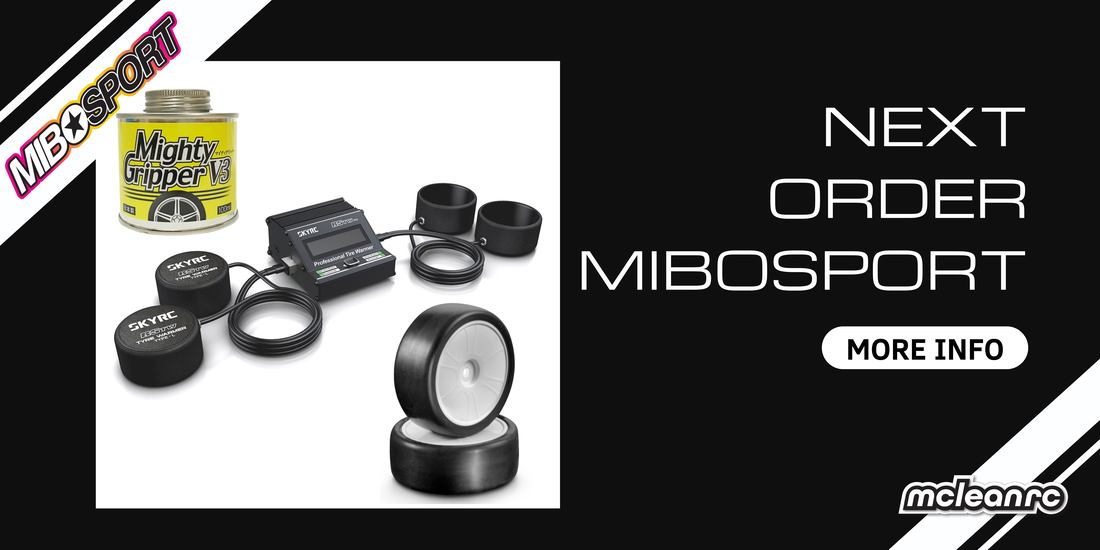 The next planned supplier order will be with Mibosport
Not only is Mibosport a great source for the touring car products we're used to, we can now get most of the Horizon brands including Arrma, Axial, Duratrax, Losi, Pro-Line, Spektrum, TLR and more Here are links to popular touring car brands: And here are some of the Horizon brands: We can get almost anything that Mibosport offers but lets avoid LiPo batters, extra large or heavy items like storage bags or pit boards (unless you plan to help cover the additional shipping charges that will be substantial) The easiest way to check a price on something is to use the Google currency converter to convert Mibosport's price in Euro to CAD then add GST/PST Thanks guys, please let me know if you need anything from Mibosport Rob  Here's my OGR setup and some notes for my X4 '23 as it finished the 2024 season. This is just a reminder for myself but you may find it helpful as well 
The car is sometimes a little loose for the first few laps. A few good warm up laps helps reduce this I sauce two heats prior to my race (eg. if I'm racing in heat 6, I sauce at the start of race 4). I gently wipe the sauce off one race prior to my heat so that it is mostly dry when I put my car down If I need more grip, I clean the tires with sauce long before my race but this makes the car prone to traction rolling so be careful if dong this I'd like to look for a little more initial and mid corner steering and possibly free up the rear end a little. It's difficult to get it to transition quickly in chicanes - like the chicane on the left side before entering the straight M17 Settings: Steering DR 93%. I click +/- of DR makes a big difference. Experiment with it Steering Curve -5% Brake DR 76% WLE Settings:
Things to try next season:
Steering curve. I use the negative curve to hide some of my jitters but try removing some if possible Drop the body 1mm front and rear Thinner Ackerman shim - should add more initial and may help with the chicanes Front bump steer shims - Experiment with less shims. Should increase in-corner steering Rear toe from 3.0 to 2.5 - Should help rotation and corner speed but may make the car too loose. Add Front droop as well to bring back some rear grip? Lower arm roll center shims - try going from 2mm to 1.5mm. Lower roll centers should increase grip on that end of the car. May give more steering and also more rear grip. Experiment and see  New from Bittydesign is the stunning looking P-GT3R body. Bittydesign says the body shell is UNIVERSAL and mounts on all 1/10 190mm models, the wing complies with the measures as per USGT regulation and can therefore be used at any race.
Full specs and details on the Bittydesign site here |
||||

